

Movement has always been where I go when life gets difficult. Horses rewired my nervous system long before I had a language for what a nervous system even is. When I feel stress, I move. When I feel uncertain, I move.
For a long time I assumed that was automatically a healthy response. Then I noticed something else:
Sometimes I was bringing the exact same pattern that was exhausting me in life into the way I moved.
That’s the thing nobody warns you about. You can understand exactly what’s driving you and still carry it straight into the behavior that’s supposed to help you.
Movement has been part of every hard chapter of my life — pregnancies, childhood trauma, an eating disorder that later left me heavier and terrified of gym class because I was scared of being judged. I hated it and I loved it, all at once. I wrote about this in a deeper way here: Movement Didn’t Save My Body, It Saved Me. I’ve said before that movement didn’t save my body — it saved me.
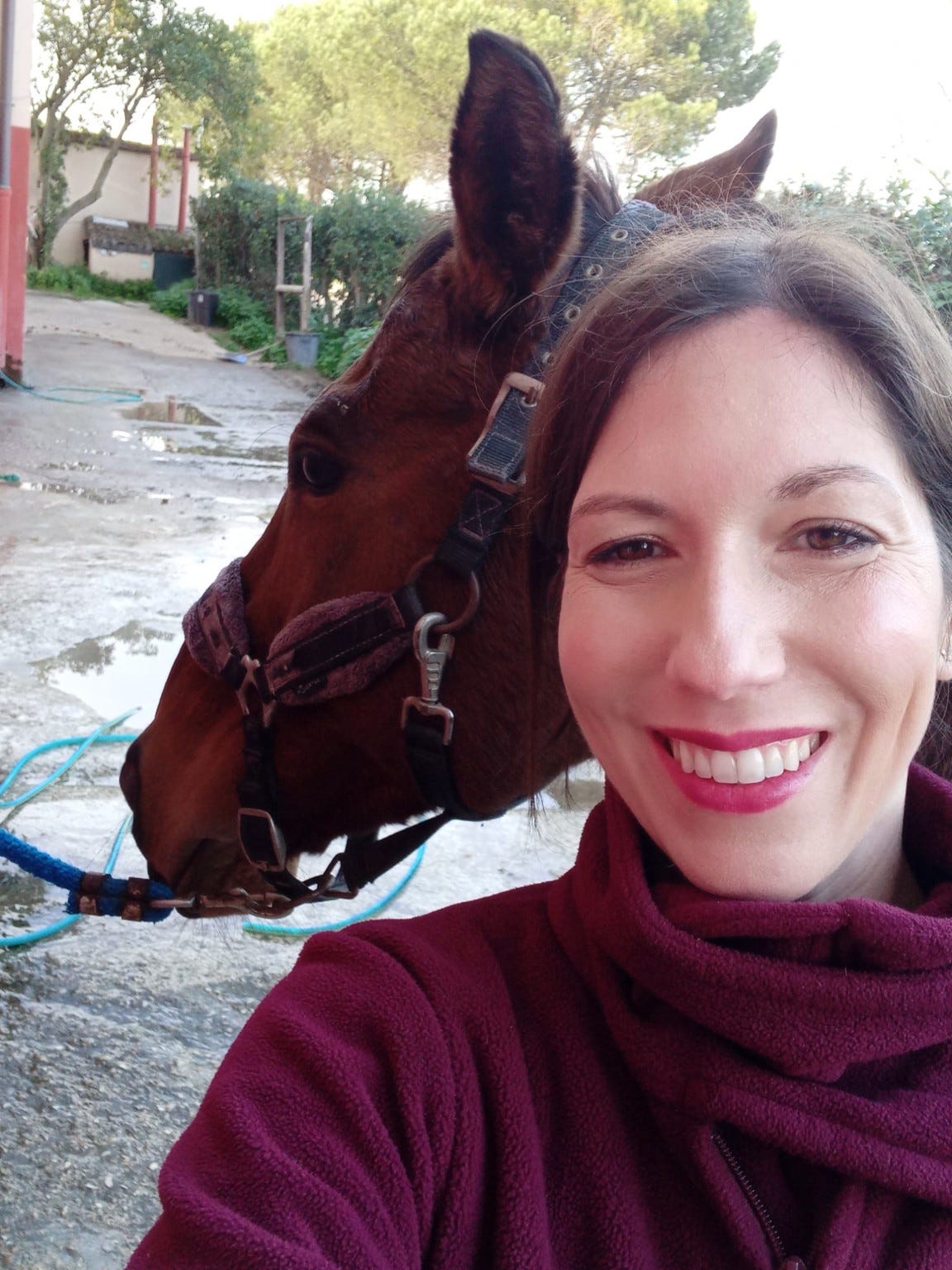
Me and my horse I used to co-lease. Her name was Yamamada
Maybe what you call “exercise” isn’t really exercise. When you get swamped, you might answer it by piling on more work. Or you clean the kitchen, disappear into scrolling, pull back from people. Sometimes it turns into pushing your body even harder. Sometimes it’s the opposite, you shut down and do nothing at all. The action, on its own, isn’t always the issue, what matters is what’s underneath it, what’s steering you there. And yours might look nothing like mine. Still, most people have a place they drift to on autopilot once life starts to feel tense and uncomfortable.
I wrote in my last article about how to stop old patterns from controlling your reactions, and since I’m a movement expert and practitioner, you might wonder why I don’t just say “move your body.” The answer is simple, and I learned it the hard way: when I had an eating disorder, I used workouts to lose more weight. The habit of movement wasn’t based on anything beneficial. When you’re burned out, is it really good to work more, or to stop? I worked more, because I was living in chronic uncertainty. To build new patterns and break the old ones, I had to get to a point where I could recognize and reframe first.
I can change my behavior without understanding what’s driving it. I can exercise, change jobs, move countries, leave a relationship, start a business, learn something new. But if I haven’t recognized the underlying pattern, I carry that same pattern straight into the new behavior.
When I was going through enormous financial uncertainty, I created the belief that I was failing. And that belief created a chain:
Uncertainty → I’m failing → I need to work harder → I can’t stop → I need to do more.
Movement could easily become part of the same cycle:
I’m stressed → I should train harder → more → don’t stop → don’t rest.
And this isn’t only about money, or about movement. It’s about over-functioning under uncertainty — and that shows up everywhere responsibility does. A CEO can run the exact same loop:
Revenue drops → I’m losing control → I need to work harder → I micromanage → my team gets less autonomous → I become even more overloaded.
If I don’t recognize the pattern first, I can carry it into everything I do — even the things that are supposed to help me.
The Bills Don’t Disappear
Recognizing and reframing helped me find my way back to myself, without the terrible feeling that I wasn’t worthy, or good enough, or ready. I carried impostor syndrome for a long time.
When I started reframing, I finally understood that whatever I was going through wasn’t my whole identity. It wasn’t proof of who I am.
This isn’t the same as positive thinking. I’m not telling myself everything is fine. I’m separating two things that had gotten fused together:
What happened, and what I concluded it means about me, are not necessarily the same thing.
The reframe doesn’t magically solve the financial problem. The bills still exist. The uncertainty still exists. But now I’m responding to what is actually happening, rather than automatically responding to the meaning I’ve attached to it.
And now I can ask: What do I actually need?
That’s where Step Two begins.
Monday Morning Always Comes
I can recognize something intellectually. I can even reframe it beautifully. Then Monday morning comes, the daily routine comes back, the bills, the emails, a rejection, a child who triggers you, work that becomes overwhelming — and you’re back in your old response. I remember being in that exact moment, hearing “try five minutes of meditation,” and wanting to tell them to fuck off. When your nervous system is stuck in a constant state of alert, sure, there are plenty of activities that calm it down — but you have to integrate them in a way that actually makes sense to you. Integration is where I had to start living differently, practicing body and mind together.
What My Body Taught Me First
I grew up around horses, moved into dancing, and at 24 started my path as a movement teacher — four intense years of Pilates teacher training, then two and a half more of power yoga. I moved even when I hated moving, when I was younger and scared of being judged. I still danced in my living room for hours when no one could see me, imagining I was on a big stage, being seen.
Training taught me more than anatomy. It taught me how other people related to their own bodies, and how far I’d drifted from my own. I saw how harshly people judge themselves, and I understood the healing power of movement — not just the prevention it gives you, but the deeply blissful state when mind and body are actually connected, when you move with the right intention. It carried me through my hardest chapters. When I’m tired, I don’t push through a full cardio session. I’ve learned what my body actually needs, and you can learn the same thing about yours.
That is why I don’t want to tell you what movement you should do. This is important.
There isn’t a single Teresa-style prescription. Nothing like “do Pilates,” or “meditate,” or “hit 10,000 steps,” or “do yoga,” or “lift weights.” What works shifts, person to person, and it shifts again depending on the season you’re in. Someone might need strength work. Someone else needs Pilates. Maybe it’s running, or a long walk, or dancing around the kitchen, or stretching, or just moving gently and playing, or, honestly, taking a real break and resting.
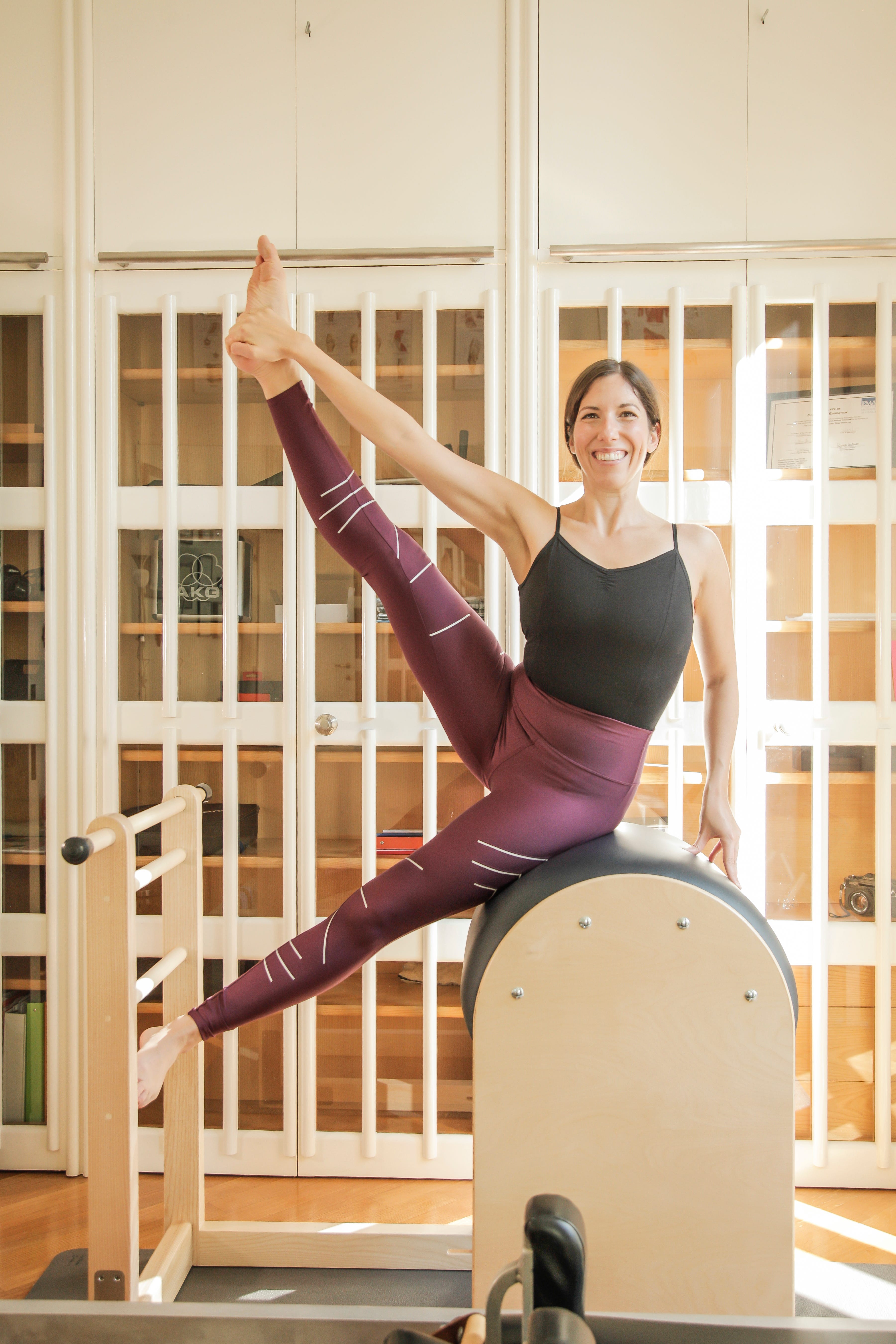
The credibility isn’t in the resume. It’s in the question underneath it:
The question isn’t “what’s the best exercise?” The question is “what do I need from movement today?”
Before You Move, Ask This
Before you move today, don’t automatically default to what you always do. Stop for a moment.
Question 1: What am I actually feeling right now?
Stressed
Angry
Restless
Exhausted
Afraid
Sad
Energetic
Disconnected
Overwhelmed
Excited
Don’t try to change it yet. Just recognize it.
Question 2: What do I need from movement today?
Energy
Strength
Release
Calm
Play
Focus
Connection
Rest
Then choose your movement based on the answer.
Afterward, ask: what changed?
Forget the calorie count. Skip the post‑workout scorekeeping, too: was it brutal enough, did I “crush it,” did I look like I knew what I was doing? Bring it back to one simple check, how do I feel right now, and how is that different from five minutes ago, before I started moving?
Give this a shot. And don’t only skim the words, actually do it.Try this. Don’t just read it.
The Other Half
Because while I was learning to pay more attention to what my body actually needed, I also started noticing something else: the questions my mind kept asking.
Keep Going Isn’t Always the Move
Movement and mindset are constantly influencing each other. What I believe I should do when something gets difficult often shows up in the way I move through everything else.
For a long time, I thought a strong mindset sounded like:
Keep going.
Find another way.
Work harder.
Don’t give up.
Stay positive.
Figure it out.
But sometimes growth means:
Stop.
Rest.
Change direction.
Ask for help.
Admit something isn’t working.
Try differently.
Let something go.
Begin again.
A fixed mindset can sound like: This is how I am. This is how things are.
A growth mindset allows: Where I am today doesn’t necessarily determine where I can go.
But growth mindset isn’t simply “I can do anything if I try hard enough.” Sometimes growth is realizing that trying harder isn’t the answer.
The Question Decides What You Find
Here’s why I’m bringing mindset into an article about movement: the questions you keep asking yourself, without noticing you’re asking them, quietly decide what you pay attention to. And what you pay attention to decides what you think is possible.
We’re surrounded by far more information than we can consciously process, so attention has to be selective — some of what’s around us gets through, most doesn’t. What you’re focused on shapes what you notice. The reticular activating system, a structure involved in filtering incoming information and regulating alertness, plays a role in that selection. That’s the actual, unglamorous science.
It doesn’t mean your brain “finds what you tell it to find” the way wellness culture likes to claim — it means your attention is a filter, and the filter has a setting.
During my financial uncertainty, if the question running through my head was “why is everything falling apart?” — what was I looking for?
Evidence that everything was falling apart: another bill, another problem, another rejection, another thing that wasn’t working.
Now imagine changing the question to “what can I actually do from here?” What am I looking for then?
An opportunity. A conversation. A person who might help. Something I can learn. A skill I already have. Something I haven’t tried. One action I can take.
My circumstances hadn’t magically changed because I changed the question. I had changed what I was looking for inside those circumstances.
This isn’t manifestation in the magical-thinking sense. Our thoughts shape our reality because they influence what we notice, how we interpret what happens, and what we do next. Change the question, and you may start noticing possibilities that were there all along.
Not About Doing It Perfectly
You’re not walking around asking nine R.I.S.E. questions every time something happens. Eventually, some of this becomes quicker. Sometimes you only need one question. Sometimes movement is what you need. Sometimes the reframe is enough. Sometimes you realize you’re not ready to act yet. Sometimes you go backward. That’s okay.
R.I.S.E. isn’t “complete these steps correctly and your problem disappears.”
It’s a framework you can return to.
Understanding this is one thing. Catching yourself doing it, in the moment, on the thing you’re actually dealing with right now — that’s the part that’s hard.
For paid members, that’s exactly what we’re doing next. Not a general exercise — yours. Pick the one situation that’s been running in the background of your week, and we’ll take it through the full practice: the mindset shift, and then the whole Integration Practice, step by step.
